Exploring Specialized Nursing Careers in Pennsylvania: What You Need to Know

Pennsylvania is home to a broad healthcare landscape, from large academic medical centers in Philadelphia and Pittsburgh to community hospitals and rural clinics across the state. For nurses with a Master of Science in Nursing degree or certification in a particular field, Pennsylvania offers a range of opportunities to pursue specialized nursing careers that align with their personal interests and professional goals.<
Unlike standard registered nurse positions, specialized roles often require additional training, advanced degrees, certifications, or clinical expertise in a particular area of practice. These careers not only expand the scope of what nurses can do but also increase their impact in shaping patient outcomes, healthcare policy, and organizational leadership.
What Are Specialized Nursing Careers?
Specialized nursing careers are advanced practice or narrowly focused roles that go beyond the general responsibilities of bedside nursing. While RNs can specialize in different areas, MSN-prepared nurses can also become nurse practitioners or pursue other advanced roles that emphasize autonomy, leadership, and expertise in specific patient populations or medical conditions.
NPs differ from standard RN positions in the following ways:
- They independently diagnose conditions, prescribe medication, and manage treatment plans in full practice authority states.
- They require graduate level education, national certification and advanced practice licensure beyond the RN credential.
- They provide opportunities for leadership, research, and education.
- They typically offer higher earning potential.
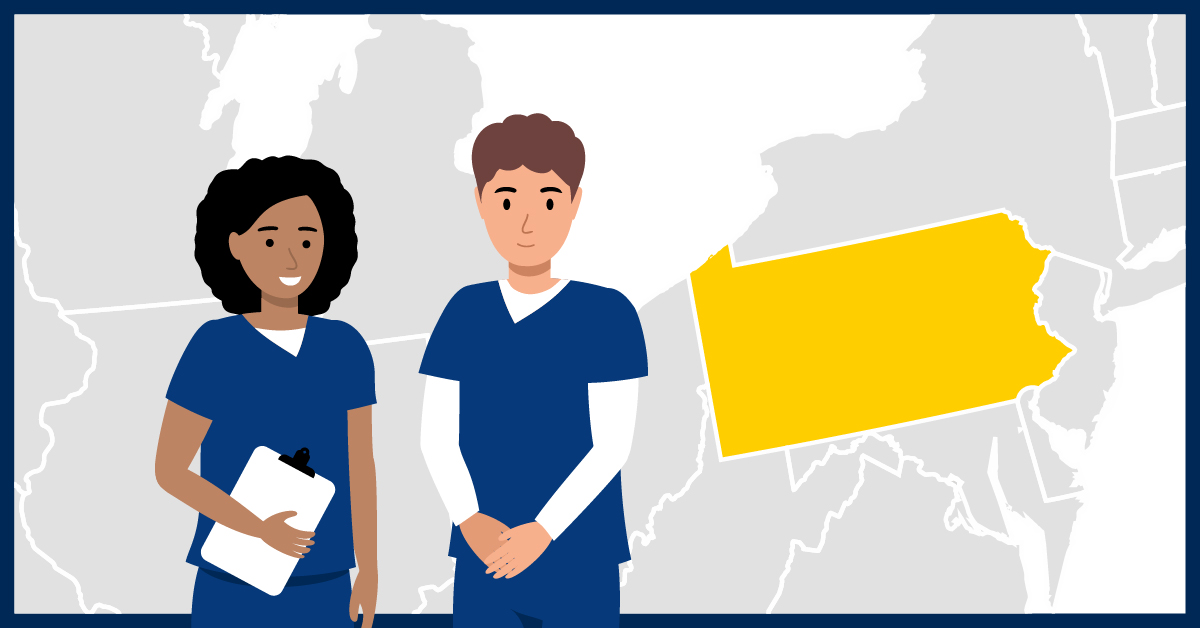
Pennsylvania is a reduced practice authority state, meaning that NPs can diagnose conditions, order and perform diagnostic tests, and develop treatment plans as long as they have a written collaborative agreement with a licensed physician.
Examples of Specialized Nursing Roles
Specialized nursing careers allow clinicians to apply their expertise in targeted areas, offering greater autonomy and impact on patient outcomes. The educational requirements for each role vary. Common specializations include the following:
- Certified registered nurse anesthetist: Administers anesthesia and monitors patients during surgical procedures, typically in hospitals and surgical centers
- Critical care nurse: Provides intensive monitoring and treatment for patients with life-threatening conditions, often working in ICUs and emergency departments
- Health informatics nurse specialist: Uses data and technology to improve patient care, manage electronic health records, and support healthcare analytics
- Hospice nurse: Delivers compassionate end-of-life care, focusing on pain management, emotional support, and dignity for patients and their families
- Infection control nurse: Develops and enforces protocols to prevent the spread of disease within healthcare facilities, safeguarding both patients and staff
- Labor and delivery nurse: Supports mothers through childbirth, monitoring fetal health, assisting physicians, and providing postpartum care
- Medical-surgical nurse: Cares for adult patients recovering from surgery or managing acute illnesses, including coordinating treatment plans across conditions
- Nurse practitioner: Provides advanced clinical care for patients with various subspecialties
- Nurse educator: Trains future nurses in academic or clinical settings; designing curricula and mentoring students to prepare them for professional practice
- Nurse midwife: Provides comprehensive care for women, including prenatal, labor, delivery, and postpartum services — emphasizing holistic and family-centered approaches
- Occupational health nurse: Promotes workplace safety, manages employee health programs, and addresses job-related injuries or illnesses
- Oncology nurse: Works with cancer patients by coordinating treatments, managing side effects, and offering emotional support throughout the care journey
- Pediatric nurse: Provides preventive services, manages illnesses, and supports family-centered care for infants, children, and adolescents
- Public health nurse: Focuses on community health initiatives, including outreach, education, and preventive care to improve population outcomes
- Travel nurse: Accepts short-term assignments across different regions, offering flexibility while addressing staffing shortages in hospitals and clinics.
- Triage nurse: Assesses ER patients, prioritizing care based on the severity of their condition
- Wound care nurse: Specializes in treating complex wounds, including surgical incisions, pressure ulcers, and diabetic foot injuries, promoting healing and preventing infection
These examples illustrate the breadth of specialized nursing careers available to nurses in Pennsylvania, each offering unique opportunities to make a difference in patient care and healthcare systems
NP Specializations for MSN Graduates to Explore
Graduate nursing education programs offer pathways into advanced practice roles that go beyond traditional bedside care. These NP specializations allow MSN or DNP prepared nurses to focus on specific patient populations or clinical needs, combining advanced knowledge with leadership and autonomy. Below are three of the most prominent specializations for NP program graduates in Pennsylvania.
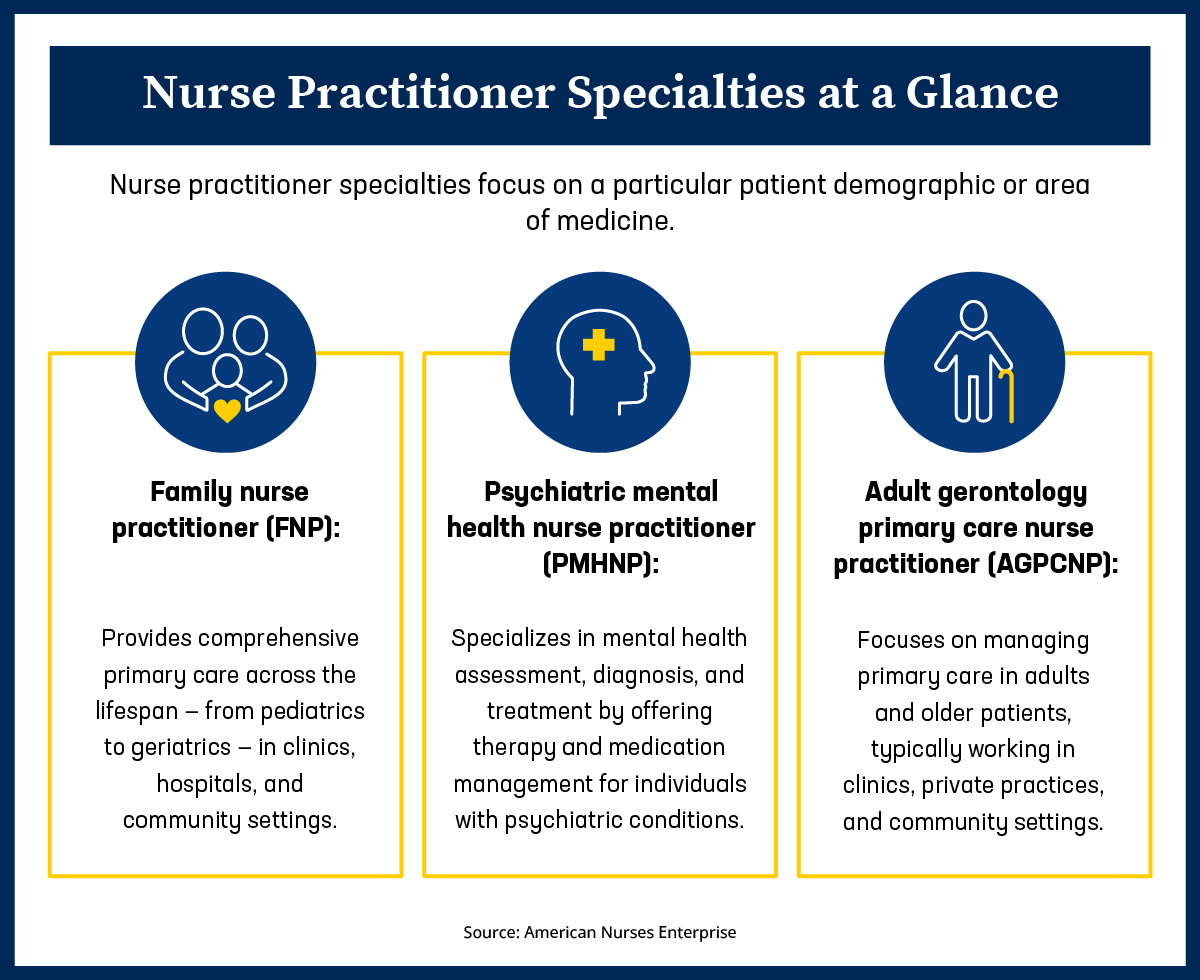
Family Nurse Practitioner
Family nurse practitioners provide primary care across the lifespan, treating patients from childhood through older adulthood. They’re often the first point of contact for patients seeking medical care and play a critical role in addressing the shortage of primary care providers.
The typical duties and responsibilities of an FNP in Pennsylvania, under physician oversight, include:
- Diagnosing and managing common illnesses and chronic conditions
- Prescribing medications and developing treatment plans
- Providing preventive care, including screenings and immunizations
- Ordering and interpreting diagnostic tests
- Collaborating with physicians and referring patients to specialists when needed
FNP Work Environments
FNPs work in diverse settings such as urgent care centers, private practices, hospitals, community health clinics, and long-term care facilities. Their broad scope allows them to adapt to both urban and rural healthcare environments.
FNP Certification and Training
To become an FNP, nurses must complete an MSN or Doctor of Nursing Practice program with a family practice focus and earn certification through the American Nurses Credentialing Center or the American Academy of Nurse Practitioners Certification Board.
Psychiatric Mental Health Nurse Practitioner
Psychiatric mental health nurse practitioners specialize in diagnosing and treating mental health conditions and substance use disorders. They combine medical expertise with therapeutic approaches to support patients’ emotional and psychological well-being.
The typical duties and responsibilities of a PMHNP in Pennsylvania, under physician oversight, include:
- Assessing, diagnosing, and treating psychiatric disorders such as depression, anxiety, and bipolar disorder
- Prescribing and managing psychiatric medications
- Providing individual, group, and family therapy
- Educating patients and their families about mental health conditions and coping strategies
- Coordinating care with other healthcare providers and community resources
PMHNP Work Environments
PMHNPs practice in hospitals, outpatient psychiatric clinics, community mental health centers, correctional facilities, and private practices. They’re also increasingly employed in primary care settings to expand access to mental health services.
PMHNP Certification and Training
PMHNPs must complete an MSN or DNP program with a psychiatric focus and obtain certification through the American Nurses Credentialing Center or the American Academy of Nurse Practitioner Certification Board. Many programs emphasize clinical rotations in psychiatric facilities to prepare graduates for complex patient needs.
Adult Gerontology Primary Care Nurse Practitioner
Adult gerontology primary care nurse practitioners focus on primary care for adult and older adult populations. This can include developing and executing long-term treatment plans and managing other health needs.
The typical duties and responsibilities of an AGPCNP in Pennsylvania, under physician oversight, include:
- Diagnosing medical conditions
- Developing and implementing multifaceted treatment plans
- Performing examinations of patients’ medical histories
- Managing transition between different care types or settings
AGPCNP Work Environments
AGPCNPs typically work in primary care settings, such as clinics, private practices, or long-term care settings.
AGPCNP Certification and Training
To practice as an AGPCNP, nurses must complete an MSN or DNP program with an adult-gerontology primary care focus and earn certification through the American Nurses Credentialing Center or the American Academy of Nurse Practitioners Certification Board.
Specialized Nursing Career Salary Data
NPs practicing in Pennsylvania earned a median annual salary of $127,400 in 2024, according to the U.S. Bureau of Labor Statistics. NPs in the lowest 10% of earners made up to $101,370, while those in the top 10% earned more than $159,920 per year.
Salaries are influenced by numerous factors, including education, experience, the hiring facility, and region. The following mean annual salary statistics show what NPs in Pennsylvania made in 2023 by city.
- Allentown-Bethlehem-Easton, PA-NJ: $127,580
- Altoona, PA: $119,110
- Bloomsburg-Berwick, PA: $115,670
- Chambersburg-Waynesboro, PA: $127,350
- East Stroudsburg, PA: $127,780
- Erie, PA: $117,160
- Harrisburg-Carlisle, PA: $131,370
- Johnstown, PA: $106,370
- Lancaster, PA: $124,330
- Lebanon, PA: $120,470
- New York-Newark-Jersey City, NY-NJ-PA: $150,500
- Philadelphia-Camden-Wilmington, PA-NJ-DE-MD: $131,680
- Pittsburgh, PA: $128,730
- Reading, PA: $128,780
- Scranton-Wilkes-Barre-Hazleton, PA: $123,580
- State College, PA: $119,980
- Williamsport, PA: $119,310
- York-Hanover, PA: $124,920
- Youngstown-Warren-Boardman, OH-PA: $105,000
- Western Pennsylvania nonmetropolitan area: $122,810
- Northern Pennsylvania nonmetropolitan area: $119,320
- Southern Pennsylvania nonmetropolitan area: $119,920
Salary by NP Specialization
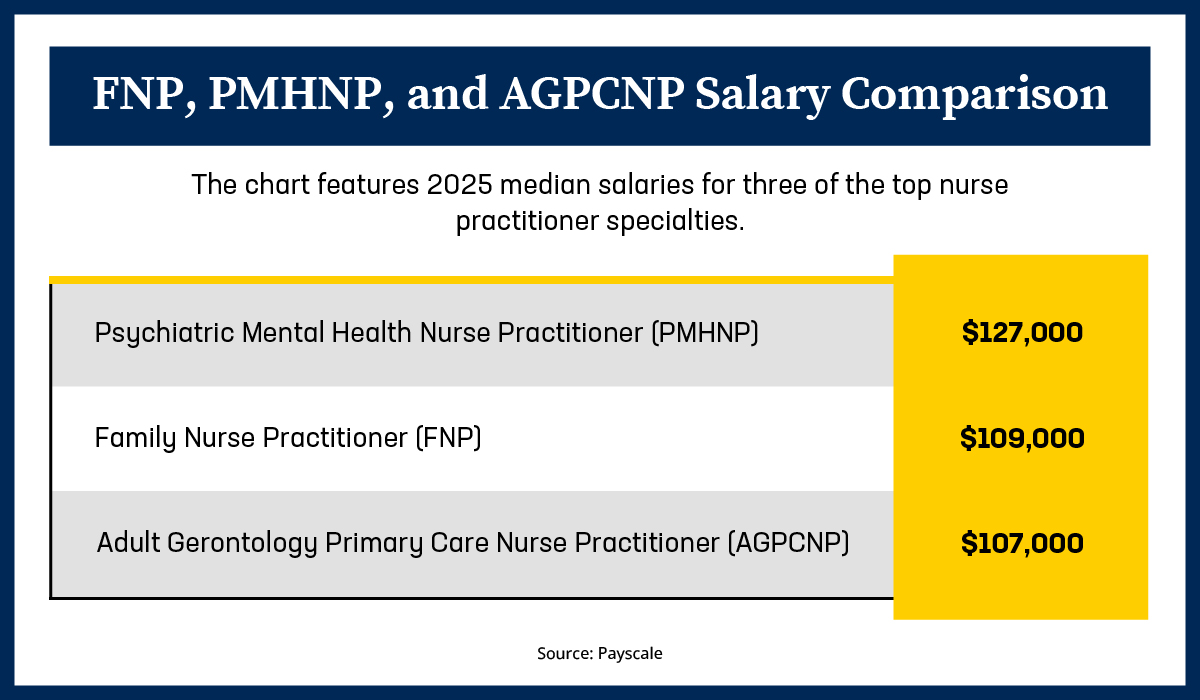
One of the many reasons nurses pursue NP certification is that advanced practice nurses generally command higher salaries than RNs. Below are salaries for popular nursing specializations:
- AGPCNP: $107,000
- Family nurse practitioner: $109,000
- PMHNP: $127,000
Other nurse specialization salaries include:
- Cardiac nurse practitioner: $96,000
- Emergency nurse practitioner: $111,000
- Neonatal nurse practitioner: $120,000
- Oncology nurse practitioner: $101,000
- Pediatric nurse practitioner: $106,000
- Surgical nurse practitioner: $97,000
- Women’s health nurse practitioner: $107,000
How to Become an NP
For nurses interested in advanced practice, here’s a step-by-step breakdown of how to become an NP.
Become a Registered Nurse
The first step is earning RN licensure, which requires earning a nursing degree and passing the National Council Licensure Examination for Registered Nurses (NCLEX-RN). Although an associate degree does qualify graduates for RN practice, most graduate programs require a Bachelor of Science in Nursing (BSN).
Some universities offer RN to MSN programs, which allow registered nurses to earn their graduate degrees on an expedited timeline without a BSN.
Gain Clinical Experience
Working as an RN provides essential hands-on experience with patient care. This foundation helps future NPs understand the complexities of direct patient care and healthcare delivery and prepares them for advanced responsibilities.
Pursue Graduate Education
Aspiring NPs must complete an MSN or a DNP degree program. MSN programs typically take two years, while DNP programs typically take three to four years. Both qualify nurses for NP roles; however, the DNP is increasingly preferred for leadership opportunities.
Select an NP Specialization
Graduate programs allow students to choose NP specializations such as family practice, psychiatric mental health, and adult-gerontology primary care. These tracks prepare nurses for specialized nursing careers that align with their interests and patient population needs.
Earn Certification and Licensure
After completing graduate nursing education, candidates must pass a national certification exam through an organization like the American Nurses Credentialing Center. An advanced practice registered nurse licensure is then required to practice. Licensure requirements and scope of practice vary by state.
Continue Professional Development
NPs are lifelong learners. Ongoing education, certifications, and clinical training ensure that they remain current with evolving healthcare practices. NPs must renew their national certification every five years and complete the practice hours and continuing education requirements. These can vary based on the certification body.
States also have their own requirements for NP license renewal. Pennsylvania requires 30 hours of continuing education every two years, including at least two hours in child abuse recognition and reporting.
Apply Your Education in a Specialized Nursing Career
Specialized nursing careers in Pennsylvania offer registered nurses the chance to move beyond generalist bedside care and into roles that shape the future of healthcare. From NP specializations such as family practice and psychiatric mental health to focused positions in areas such as cardiology, oncology, and informatics, these opportunities provide nurses with greater autonomy, higher earning potential, and the ability to make a lasting impact on patient outcomes.
Whether you aspire to lead in clinical practice, educate the next generation of nurses, or serve communities through public health initiatives, Pennsylvania’s healthcare landscape is rich with opportunity. By pursuing specialized graduate level education and certification now, you position yourself at the forefront of a profession that continues to evolve and expand.
The online MSN programs at Wilkes University are designed to be completed in as little as two years, ideal for career-oriented learners who are interested in NP specializations such as family nurse practitioner, adult-gerontology primary care, and psychiatric-mental health.
Advancing your career through specialized nursing pathways ensures that you can meet today’s challenges and help define tomorrow’s solutions. Find out how Wilkes University can help you achieve your professional goals.
Sources:
- American Academy of Nurse Practitioners, Are You Considering a Career as an Adult-Gerontology Primary Care Nurse Practitioner?
- American Academy of Nurse Practitioners Certification Board, Psychiatric Mental Health Nurse Practitioner (PMHNP)
- American Academy of Nurse Practitioners Certification Board, Renewal Requirements
- American Association of Nurse Practitioners, Pennsylvania
- American Association of Nurse Practitioners, State Practice Environment
- American Nurses Association, Nursing Career Pathways
- American Nurses Credentialing Center, Adult-Gerontology Primary Care Nurse Practitioner Certification (AGPCNP-BC)
- Cleveland Clinic, PMHNP (Psychiatric Nurse Practitioner)
- Indeed, “21 Types of Nurses (With Salaries, Duties and FAQS)”
- Indeed, What Is an Adult Gerontology Nurse Practitioner?
- Johnson & Johnson Nursing, Nursing Specialties
- Kaplan, What Is a Family Nurse Practitioner (FNP)?
- Payscale, Average Adult Gerontology Nurse Practitioner Salary
- Payscale, Average Cardiac Nurse Practitioner Salary
- Payscale, Average Family Nurse Practitioner (NP) Salary
- Payscale, Average Neonatal Nurse Practitioner (NP) Salary
- Payscale, Average Nurse Practitioner (NP) With Emergency Room (ER) Skills Hourly Pay
- Payscale, Average Oncology Nurse Practitioner Salary
- Payscale, Average Pediatrics Nurse Practitioner (NP) Salary
- Payscale, Average Surgical Nurse Practitioner Salary
- Payscale, Average Women’s Health Nurse Practitioner (NP) Salary
- Payscale, Salary for Certification: Psychiatric Mental Health Nurse Practitioner (PMHNP)
- Pennsylvania Coalition of Nurse Practitioners, Scope of Practice
- SimpleNursing, “81 Types of Nurses: Their Functions, Salaries, & Career Outlook”
- U.S. Bureau of Labor Statistics, Occupational Employment and Wage Statistics, Area: Pennsylvania